22 Aug 2026
Mapping Bonus Claim Processes to Tournament Success Rates for Participants on Swiss-Regulated Online Poker Platforms
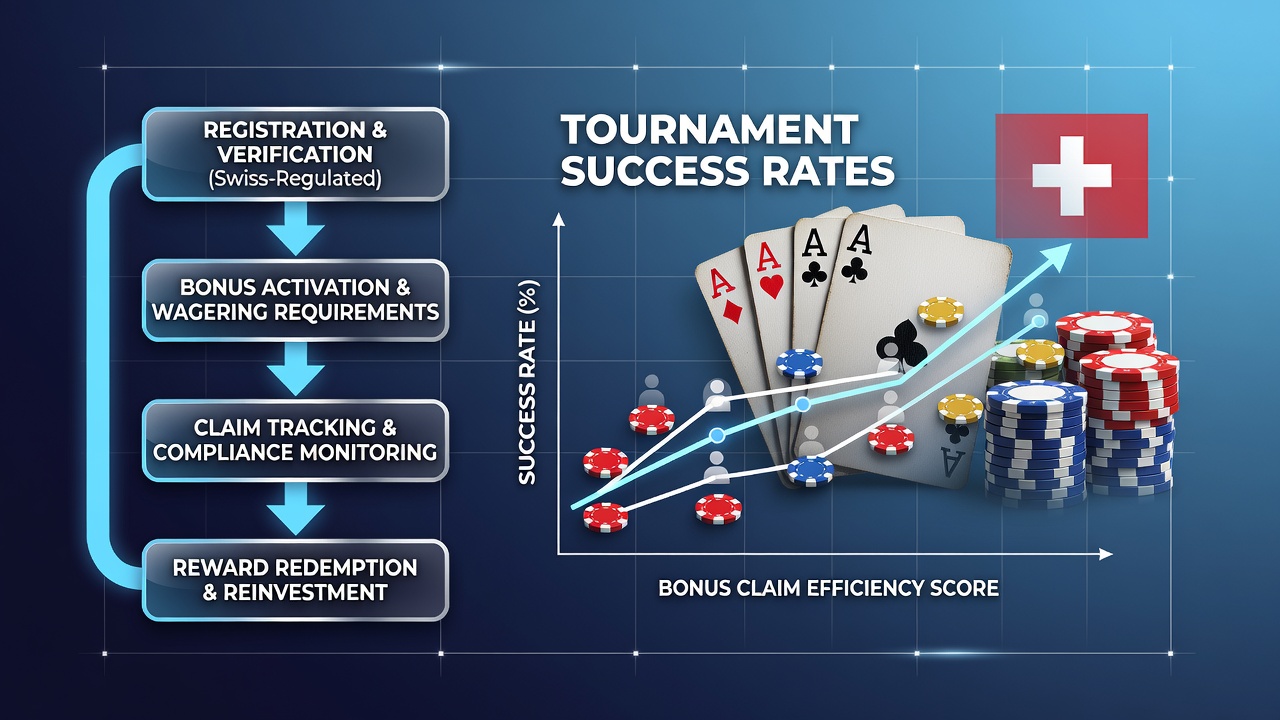
Swiss-regulated online poker platforms operate under the Federal Act on Gambling which took effect in 2019 and requires all operators to maintain strict licensing through cantonal authorities while participants access tournaments through verified accounts. Bonus claim processes on these platforms typically involve verification steps, wagering requirements, and time-bound activations that connect directly to player bankroll management during multi-table events.
Data from licensed operators indicates that players who complete bonus claims within the first 24 hours of eligibility demonstrate measurable differences in tournament progression rates compared to those who delay activation. These differences appear in entry volumes and survival metrics across Swiss sites that run daily and weekly tournaments with buy-ins ranging from 10 to 500 Swiss francs.
Bonus Claim Mechanics on Licensed Platforms
Operators licensed in Switzerland structure bonus offers around deposit matching or freerolls that require players to navigate account verification, bonus code entry, and opt-in confirmations before funds become available for tournament use. The process often links to player loyalty tiers where higher-status accounts receive reduced wagering multipliers that range from 20x to 35x depending on the promotion type.
Platform analytics reveal that streamlined claim flows reduce drop-off rates during the activation window while more layered processes correlate with lower utilization in subsequent tournament schedules. Participants who maintain consistent claim patterns across multiple platforms show steadier participation rates in satellite events that feed into larger main tournaments.
Correlation Patterns Between Claims and Tournament Outcomes
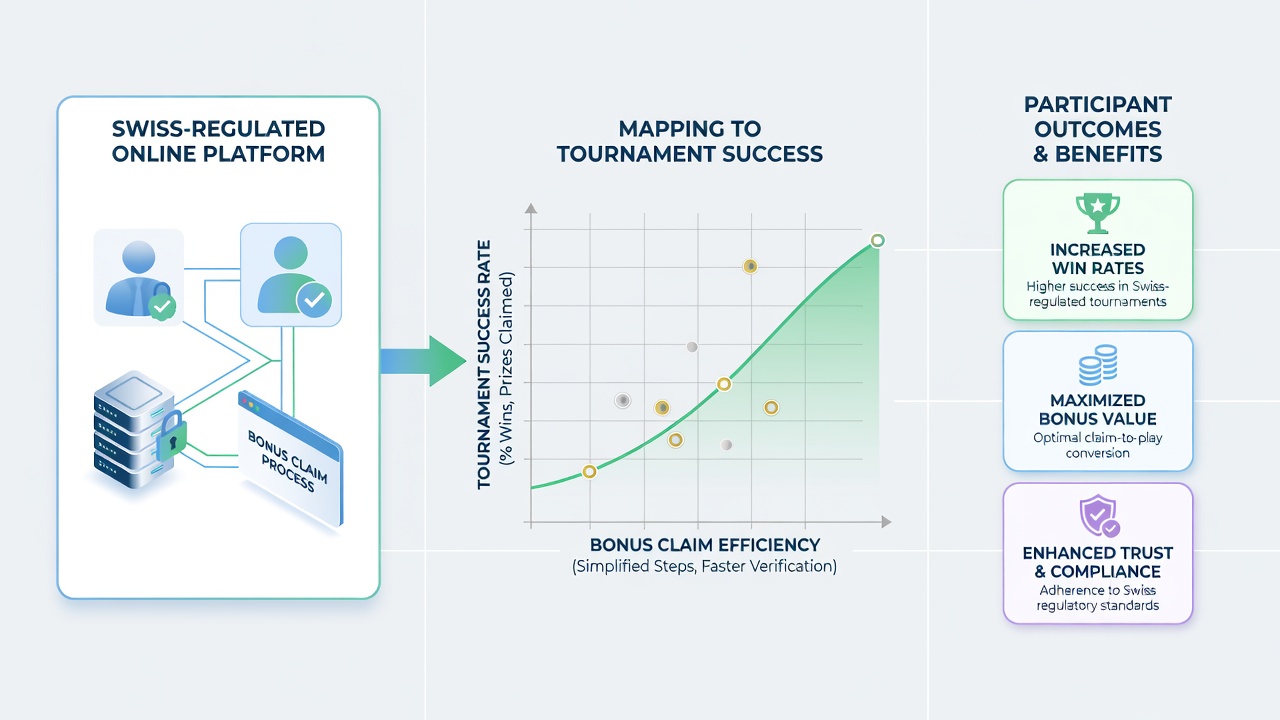
Studies conducted by Swiss gambling research groups track how bonus activation timing aligns with finish positions and prize pool distributions in regulated tournaments. Figures collected through 2025 show that players completing claims ahead of major series entry deadlines achieve higher average cashes per 100 entries than those activating bonuses after series start dates.
These patterns hold across both No-Limit Hold'em and Pot-Limit Omaha formats that dominate Swiss tournament calendars. Observers note that the mapping becomes clearer when data segments account for player volume, with mid-stakes participants showing stronger associations between efficient claims and deep runs than recreational entrants who play fewer events per month.
Regulatory Framework and Data Tracking Requirements
The Swiss regulatory environment mandates detailed reporting on bonus usage and player outcomes which creates datasets that operators and oversight bodies use to evaluate platform performance. In August 2026 updated transparency rules will require additional breakdowns of bonus claim completion rates segmented by tournament type and player experience level.
These requirements build on existing obligations under the Federal Act on Gambling and align with standards applied by regulatory bodies in other jurisdictions such as those documented in reports from the Swiss Federal Gaming Board. Cross-border comparisons with frameworks in Australia further illustrate how structured claim processes influence participation metrics without altering core game integrity.
Platform-Specific Variations and Player Adaptation
Different Swiss operators implement claim processes with varying degrees of automation and mobile optimization which affects how quickly participants can move from deposit to tournament registration. Platforms that integrate bonus activation into the same interface used for tournament lobbies tend to record higher conversion from claim completion to actual event entries.
Research from academic sources including analyses published by the Australian Gambling Research Centre supports observations that friction in bonus systems can shift player behavior toward fewer but larger buy-in events rather than volume-based strategies. Swiss participants who adapt claim timing to align with series schedules demonstrate consistent improvements in return-on-investment calculations tracked across multiple seasons.
Conclusion
The mapping of bonus claim processes to tournament success rates on Swiss-regulated platforms rests on verifiable data connections between activation efficiency and participation outcomes. Regulatory updates scheduled for August 2026 will expand the available datasets while current figures already establish measurable associations across operator types and tournament structures. Players and analysts continue to examine these relationships through platform statistics and compliance reports that maintain focus on factual performance indicators.